
We’ve all heard those horror stories of people succumbing to the effects of carbon monoxide. That’s because it’s a highly poisonous gas which has no colour, taste or smell.
That makes it impossible to detect without an alarm.
And that’s why your home needs to have at least one carbon monoxide alarm installed. That way, you know your family is being kept safe with something keeping a watchful eye over them, no matter what.
Alarms are far better than the ‘Black Spot’ indicators—not only are these not accurate, but they also won’t alert you to a potential risk.
But what do you need to do with the carbon monoxide alarm once you get it?
Where Do I Put It?
But how many you need, and the best places to install them, depends on the risks which are present in your home.
If you’re only going to purchase one, then it needs to be placed next to the area where everyone sleeps. That way, should the alarm ever sound, it will be loud enough to wake up everyone in the home. This is the best location as we’re at our most vulnerable when we’re sleeping, so this is where you need to have one installed.
For a better level of protection, you should also place CO alarms in the same rooms where the potential hazards exist. It is a good idea to fit them in any room with devices which can produce the gas. These include boilers, gas cookers and solid fuel appliances like fireplaces.
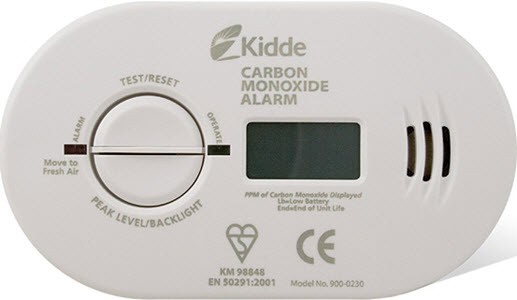
Some are free-standing and require no fixing, but many of them do. However, they’re relatively simple to install as they only require a few screws in the wall.
They are better off being fixed on the wall—ideally, secured at least 15cm away from the ceiling. And when placed in the same room as a possible source, it’s better to place them between 1m and 3m away from the appliance.
The alarm needs to remain in the open air so it’s monitoring the same air that everyone is inhaling, so make sure it isn’t blocked by furniture. And in bedrooms and living rooms, it may be better to place it at the same height as people sleeping or sitting.
However, it is possible to fix them to the ceiling too. In fact, if you have a combination smoke and CO alarm, it’s the best place to install it. But you will need to make sure it’s at least 30cm away from walls or other obstructions, like light fittings.
And just like your smoke alarms, CO alarms need regular testing and maintaining too.
What Are The Potential Sources Of CO?
There are many risks which would benefit from being partnered with a CO alarm. That way, you can quickly become aware of any fault that may arise and resolve it as soon as possible.
In rented accommodation, fire safety regulations now state that landlords must provide a CO alarm where there is a used fireplace.
However, it must be stressed that having an alarm is not a replacement for the annual inspection of gas appliances. And it should also not replace having your chimneys and wood-burning appliances checked regularly.
Possible risks include faulty:
- Gas stoves;
- Fireplaces, solid-fuel burning appliances;
- Boilers;
- Water heaters;
- Cookers;
- Central heating systems.
Even LPG gas appliances in caravans and boats are possible sources, as are having barbecues in confined areas, such as in a tent.
But even if you don’t have any of these potential carbon monoxide sources, you should still have an alarm. CO has been known to seep through the walls, floors, and ceilings of neighbouring homes.
Should your CO alarm sound, it must be taken seriously. The first course of action is to open all doors and windows for ventilation and get everyone out to safety.
Turn off any possible appliances which may be causing the leak and get someone out immediately to check they are safe to use. You may want to call the Gas Emergency Service 24-hour line on 0800 111 999.
And if anyone is showing any possible signs of poisoning, or generally feeling unwell, you must seek medical advice immediately.
Make sure you’re taking the relevant steps to keep yourself, your family, and those living around you as safe as possible. You can do this by ensuring trained professionals install, maintain and service your appliances, and by having at least a CO alarm in your home.